
Searching for Union County Warrants
No official Union County online active-warrant search was located. There is no county website where a person can type a name and pull up open warrants. Any site that claims to offer one for the county is not an official source. The real path is a phone call or a visit to the office that issued the warrant.
Because warrants live with the issuing court, the first job is to figure out which court that is. A felony or Circuit case points to the Circuit Clerk. A traffic ticket or a small misdemeanor points to Justice Court or a Municipal Court. An arrest warrant points to the Sheriff's Office. There is also no public statewide Mississippi warrant search, so a county-by-county, court-by-court approach is the standard. The sections below lay out each channel and what to expect from it.
Who Issues Warrants in Union County
Warrants come from judges, and different courts handle different matters. A Circuit Court judge issues warrants in felony cases and major civil matters. A Justice Court or Municipal Court judge issues bench warrants when someone misses a court date on a traffic or misdemeanor charge. A Chancery Court can issue orders in contempt and family matters. The Sheriff's Office serves and enforces many of these once they are signed.
Mississippi Electronic Courts, the system behind Circuit cases, uses plain status flags that show warrant activity in a case. The labels include Bench Warrant Issued, Bench Warrant Returned, Capias Pending, and Bound Over. A Bound Over flag means a lower-court criminal matter has moved up to Circuit Court. These flags appear in the docket, not in a public warrant database, so a login or a clerk contact is still needed to read them.
Types of Warrants in Union County
Not all warrants are the same. The type tells a reader why it was issued and which office to call. Some come from a missed court date, some from a new charge, and some from a request to search a place. The list below covers the kinds most often seen in the county.
- Arrest warrant - Authorizes police to take a named person into custody on a charge.
- Bench warrant - Issued by a judge, most often when a person fails to appear in court.
- Capias - A court order to bring a person in, frequently after a nonappearance or unpaid obligation.
- Search warrant - Lets officers search a specific place or item named in the order.
- Fugitive warrant - Targets a person wanted in another jurisdiction.
- Probation-violation warrant - Issued when someone is accused of breaking the terms of probation or supervision.
How to Check for a Union County Warrant
With no online lookup, the check is done by contacting the right office in order. Start with the court most likely to have issued the warrant, then call the Sheriff for arrest-warrant and surrender questions. A public records request is the formal fallback when a phone call is not enough, though active investigations and sealed orders can limit what is released.
- Call the Union County Circuit Clerk at 662-534-1910 for felony bench warrants, capias, and case-order status in Circuit Court.
- Contact the Justice Court or the applicable Municipal Court for traffic, misdemeanor, and failure-to-appear warrants, which often sit at the lower-court level.
- Call the Union County Sheriff's Office at 662-534-1941 for arrest-warrant questions and surrender procedure.
- Call the Chancery Clerk at 662-534-1900 for contempt or civil and family-matter orders.
- Submit a public records request to the office that holds the record if a call does not resolve the question.
The official Union County mobile app does exist as a landing page, but no warrant-search feature was confirmed in it. The app should not be treated as a warrant lookup. The phone and counter channels above remain the dependable way to confirm a warrant.
Bench Warrants and Failure to Appear in Union County
The most common warrant a person runs into is a bench warrant. A judge signs one when someone fails to appear for a scheduled court date, misses a payment, or ignores a court order. It does not require a new crime. A missed traffic date in Justice Court or a Municipal Court can be enough. Once signed, the warrant stays active until the person is brought in or the court recalls it.
A capias works in much the same way. It is a court order to take a person into custody, often after a nonappearance or an unpaid obligation. In a Circuit case, the docket may show a Capias Pending flag while the order is outstanding. A bench warrant or capias can also lead to a hold at the jail, which is why these orders and the booking record are linked. The custody side of that hold is tracked in the Union County inmate records.
Clearing a bench warrant usually means addressing what caused it. That can be a new court date, a payment, or a bond. A judge has to recall the warrant, so the matter has to go back before the court that issued it. Acting before an arrest gives a person far more room to resolve it on better terms.
What a Union County Warrant Record Shows
When an office shares warrant information, the detail follows a familiar pattern. The exact fields depend on the issuing court and what the law allows to be released. The table below lists the items a warrant record may include.
| Field | What It Shows |
|---|---|
| Defendant Name | The person the warrant names. |
| Warrant Type | Arrest, bench, capias, search, fugitive, or probation violation. |
| Issuing Court | The court that signed the order, such as Circuit, Justice, or Municipal Court. |
| Charge or Reason | The offense or the missed-court reason behind the warrant. |
| Bond Status | Whether bond is set or the warrant is held with no bond. |
| Date Issued / Returned | When the warrant was signed and, if applicable, when it was served. |
A warrant entry may also list the related court date, the case number, and the agency holding the warrant. None of this means a person has been convicted, since a warrant is part of an open process, not a final judgment. What an office actually shares can be narrower than this full list, because the law and the stage of the case both control how much detail leaves the counter.
What to Do If You Have an Outstanding Warrant
An outstanding warrant does not go away on its own. Handling it quickly, and with the right help, gives a person the most control over the outcome. The steps below follow the resolution path from confirming the warrant to clearing it.
- Do not rely on an unofficial website to confirm or clear a warrant.
- Call the court that likely issued it, whether Circuit, Justice, Municipal, or Chancery, and ask whether an active warrant or capias exists.
- Ask what the court requires, such as a court appearance, a payment, a bond, or a filing by an attorney.
- For an arrest warrant, call the Sheriff's Office about surrender procedure and bond before acting.
- If represented, let counsel contact the court or prosecutor first.
- After the matter is resolved, ask how soon the warrant is recalled in the court and law-enforcement systems.
Important: Talk to a lawyer before turning yourself in, because an attorney can often arrange surrender, address bond, and protect your rights at the first appearance.
Sealed and Juvenile Warrants in Union County
Some warrants are not open to the public at all. A sealed warrant, such as one tied to an active investigation, can be withheld so it is not tipped off before it is served. Juvenile matters handled in Youth Court are confidential under Mississippi law, and warrant detail in those cases is not part of any public search. Personal identifiers in any warrant filing may also be redacted.
These limits sit alongside Mississippi's general open-records policy. The Public Records Act supports access to many records held by public bodies, but it does not override sealing orders, juvenile confidentiality, or the safety reasons a court may keep a warrant quiet. When a record is withheld, the office can explain the basis without releasing the protected detail.
Federal warrants are another category that a county search will not show. They are issued and held in the federal system, not by the county courts or the Sheriff. Because of this split, a clear answer about a single person can require checking more than one level, which is why naming the likely court and charge up front saves time on every call.
Federal Cases Are a Separate Channel
Union County warrants and cases are county and state matters. Federal warrants and federal cases run on a different track entirely. Union County sits in the U.S. District Court for the Northern District of Mississippi, with the Oxford division covering the area. Federal criminal, civil, and bankruptcy matters are filed there, not with the county clerks, and the records are reached through the federal system rather than a Union County office.
Federal bankruptcy filings for the area go through the U.S. Bankruptcy Court for the Northern District of Mississippi, whose site is the Northern District bankruptcy court.
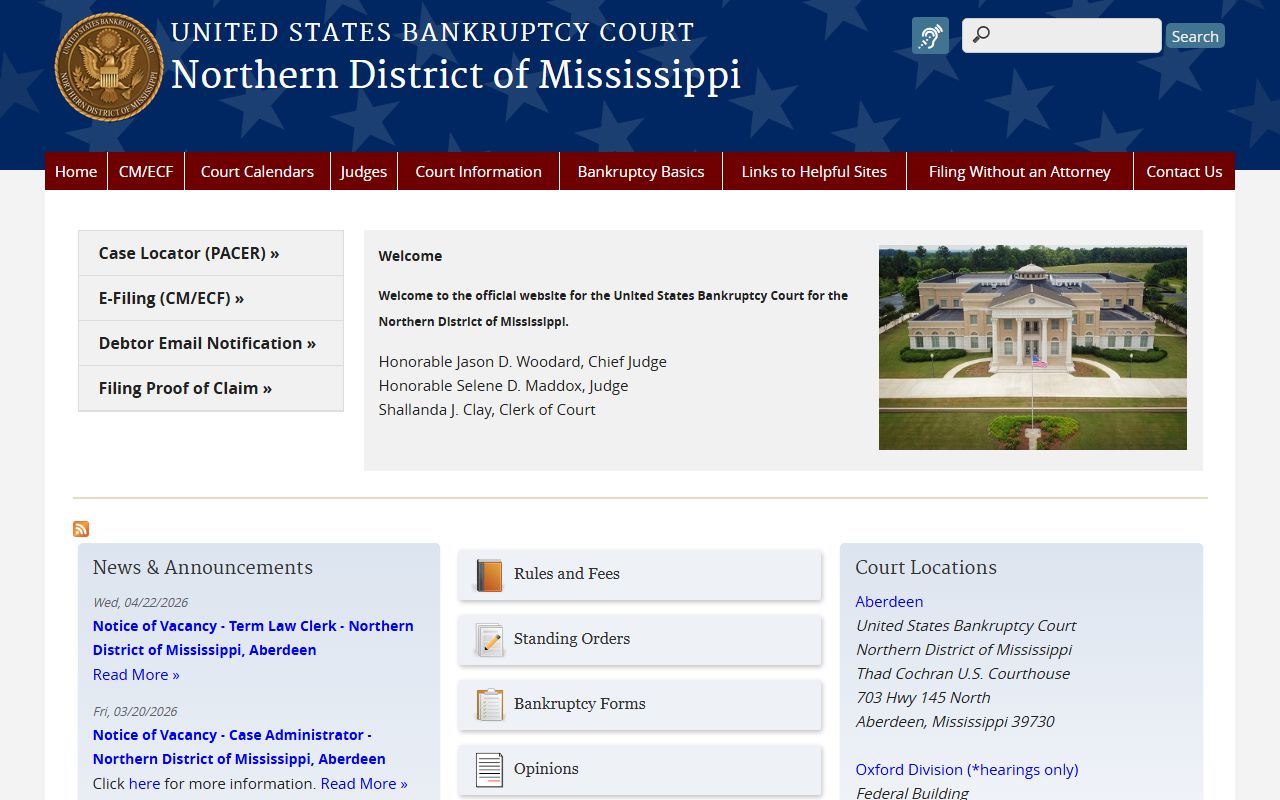
That court handles federal bankruptcy matters that a county warrant search would never touch. Federal dockets and case documents are searched through PACER, the public access service, using the court lookup for the Mississippi Northern Bankruptcy Court.
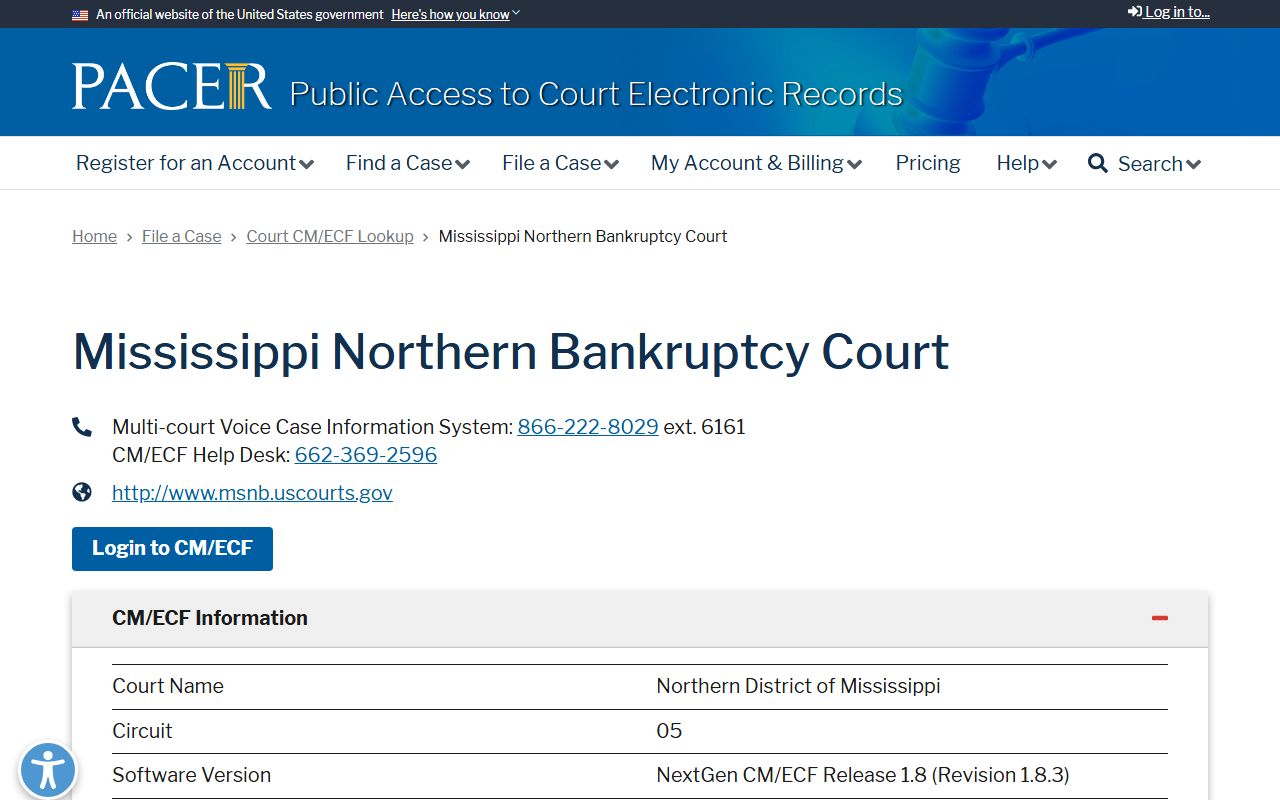
PACER is the federal counterpart to the county and MEC channels, and it requires its own account. Appeals from these federal cases go higher still, to the U.S. Court of Appeals for the Fifth Circuit, posted at the Fifth Circuit court site.
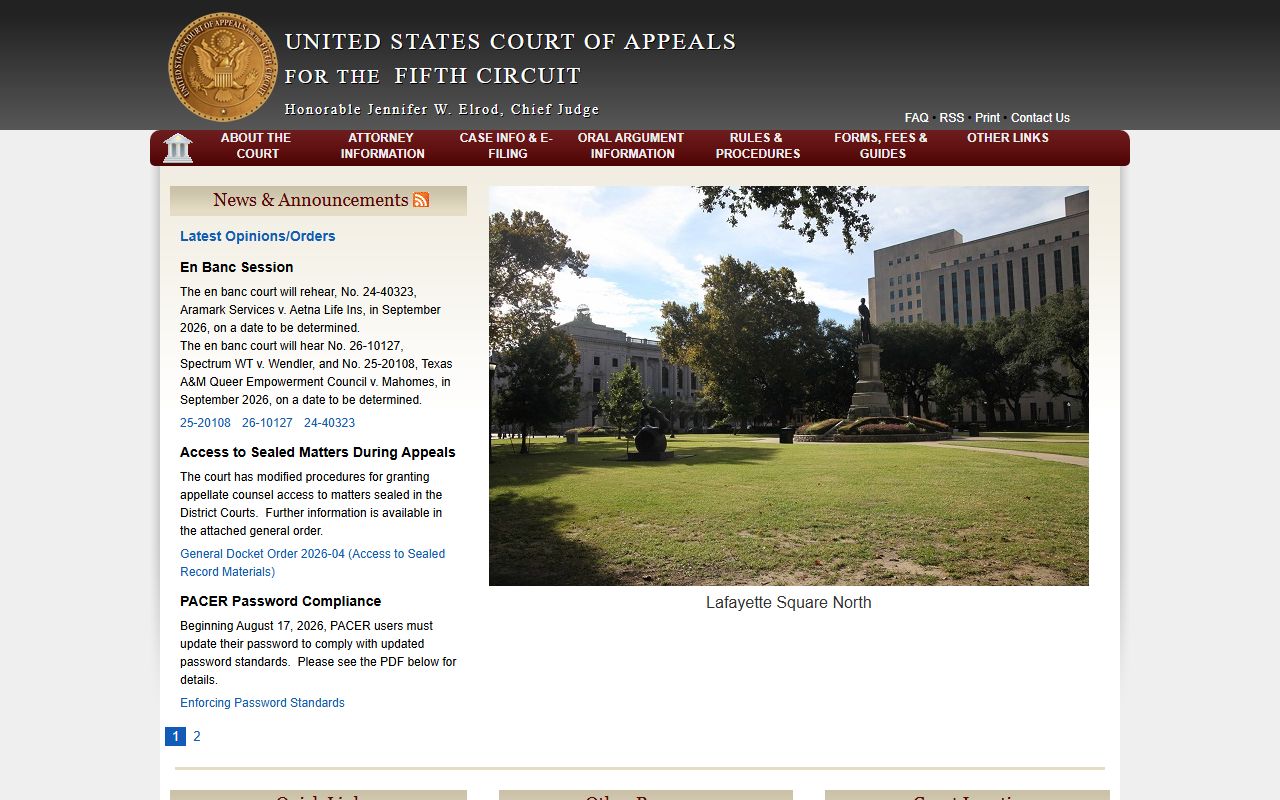
For a Union County warrant question, though, the county courts and the Sheriff remain the right place to start, since the federal channel covers a separate set of cases.