
Union County Arrest Records and Court Charges
An arrest record is the account of an arrest itself. It shows who made the arrest, when it happened, the booking, and the holding facility. In Union County, most arrests run through the Sheriff's Office or a city police department, and the booking detail sits with the agency that made the arrest. An arrest, on its own, is only an accusation by an officer. It does not decide guilt, and it is not the same as a formal court charge.
The court charge record begins when the prosecutor steps in. After an arrest, the District Attorney reviews the case and decides which charges to file, if any. Those charges are filed with the court clerk and become the charge record, tracked through the case. The booking and custody side lives in the Union County inmate records, while the full case file, with every hearing and the final outcome, lives in the Union County criminal court records. The court charges after arrest are the bridge between those two.
The Sheriff's Office is the starting point for arrest and booking questions. Sheriff Jimmy Edwards runs the office at 300 Carter Avenue in New Albany, and the listing for it appears in the Mississippi Sheriffs' Association directory.
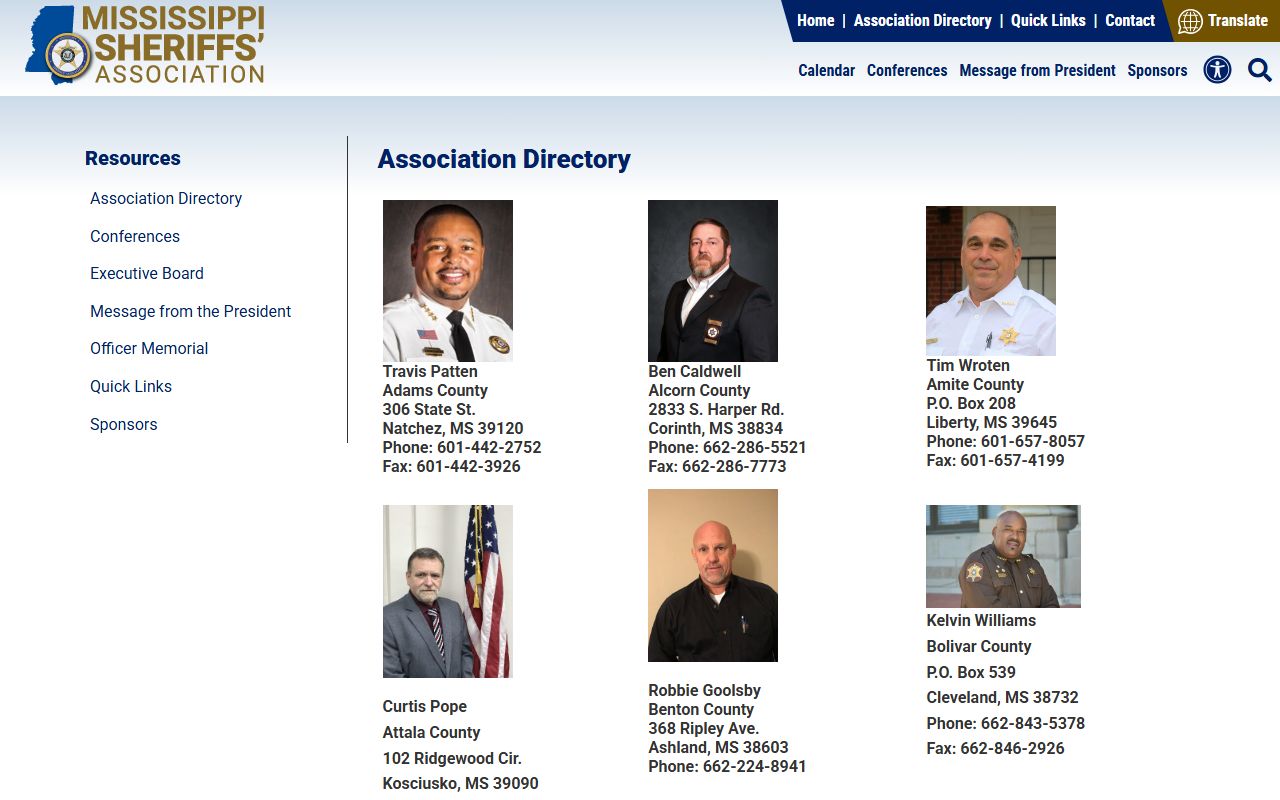
That directory confirms the office name, address, and phone, which is the most direct way to ask about a recent Union County arrest because no official online county jail roster was located.
How to Find Union County Arrest Records and Charges
There is no single county website that lists every arrest and charge in one place. Charges filed in Circuit Court show up through Mississippi Electronic Courts and its public side, PAMEC, which needs a login. Booking and recent-arrest detail comes from the Sheriff's Office by phone or in person. Lower-court charges in Justice Court or Municipal Court are handled directly by those courts.
- Register for a public account through the PAMEC online registration page to view Circuit Court filings.
- Search by the defendant's name or by the case number assigned by the clerk.
- Open the case and read the charge list, including each filed offense.
- Check each charge's statute, level, and current status to see whether it is still pending, amended, or resolved.
For recent booking questions, call the Union County Sheriff's Office at 662-534-1941. State custody after sentencing is tracked separately by the Mississippi Department of Corrections through the MDOC inmate search, which is not a county arrest file. A booking record and a court charge record will not always match, because each office keeps its own version.
How Charges Are Filed After a Union County Arrest
The charge record starts with a charging document. After booking, the case moves to the prosecutor, who decides whether and how to charge. There are three main ways a charge reaches the court. A complaint is the simplest and is common for misdemeanors. An information is filed by the prosecutor for many felonies. An indictment is returned by a grand jury for serious felonies. In Union County, felony charges are prosecuted in Circuit Court after the matter is bound over from a lower court.
| Complaint | Information | Indictment | |
|---|---|---|---|
| Filed By | Officer or prosecutor | Prosecutor | Grand jury |
| Common For | Misdemeanors | Many felonies | Serious felonies |
| Starts | The case | The case | The case |
The prosecutor here is the Third Circuit District Attorney, Ben Creekmore, whose office serves Union and six neighboring counties. The office runs a New Albany location at 102 North Camp Avenue, and its address and phone numbers are posted on the Third Circuit DA contact page.
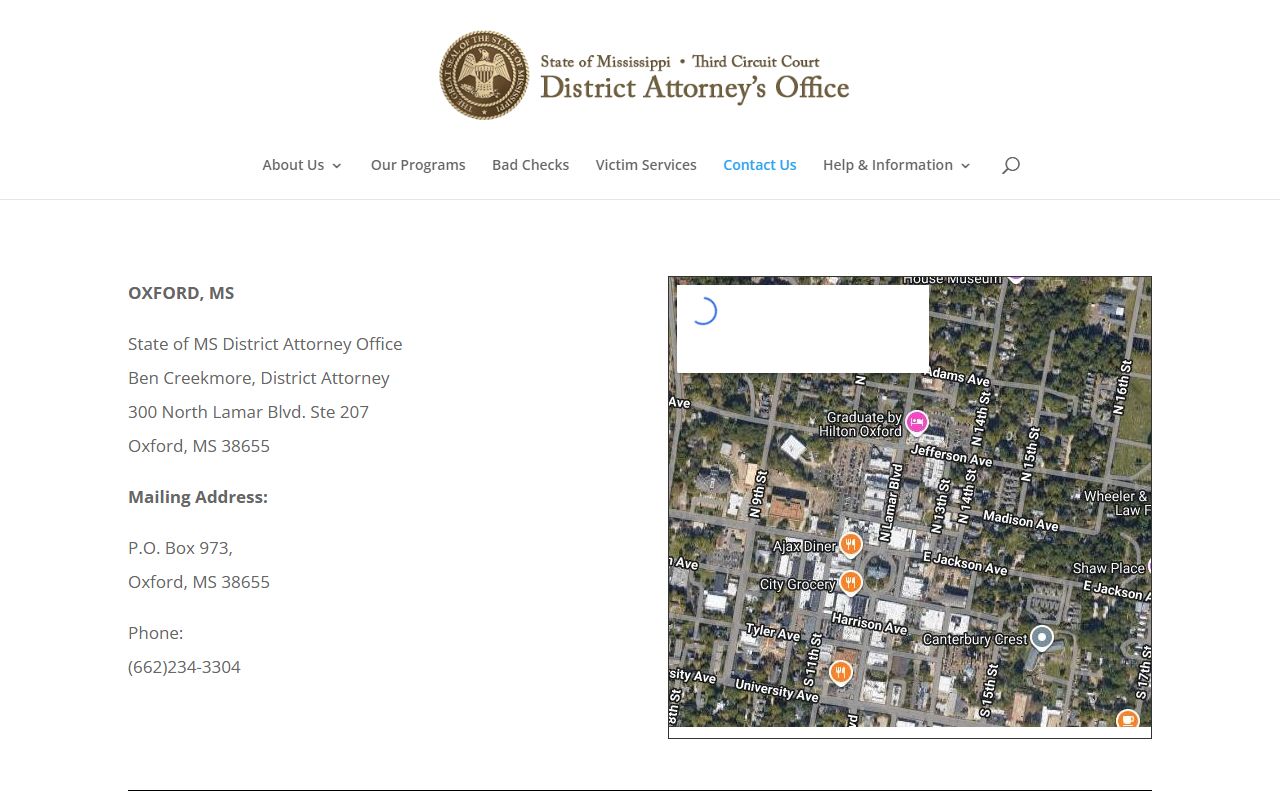
That contact page is the right channel for questions about how a charge was filed in New Albany, because the District Attorney, not the arresting officer, makes the final charging decision.
Charge Status in Union County Court Records
Charges are not fixed once filed. As a case moves, a charge can be amended, reduced, added, dropped, or dismissed. Reading the status of each charge shows where it stands now. Mississippi Electronic Courts even carries a Nolle Pros Pending flag, which signals the prosecutor is moving to drop a charge. The table below lists the status terms a reader meets most often.
| Status | What It Means |
|---|---|
| Pending | The charge is filed and the case is still open with no final outcome yet. |
| Amended / Reduced | The charge was changed, often to a lesser offense, as the case developed. |
| Dismissed | The court dropped the charge, so it ends without a conviction. |
| Nolle Prosequi | The prosecutor chose not to pursue the charge, ending it short of trial. |
The people who handle these decisions are listed by name and role. The Union County Assistant District Attorney is Paul "Mason" Wages, and the office's investigators and victim advocates appear on the Third Circuit DA attorney profiles page.
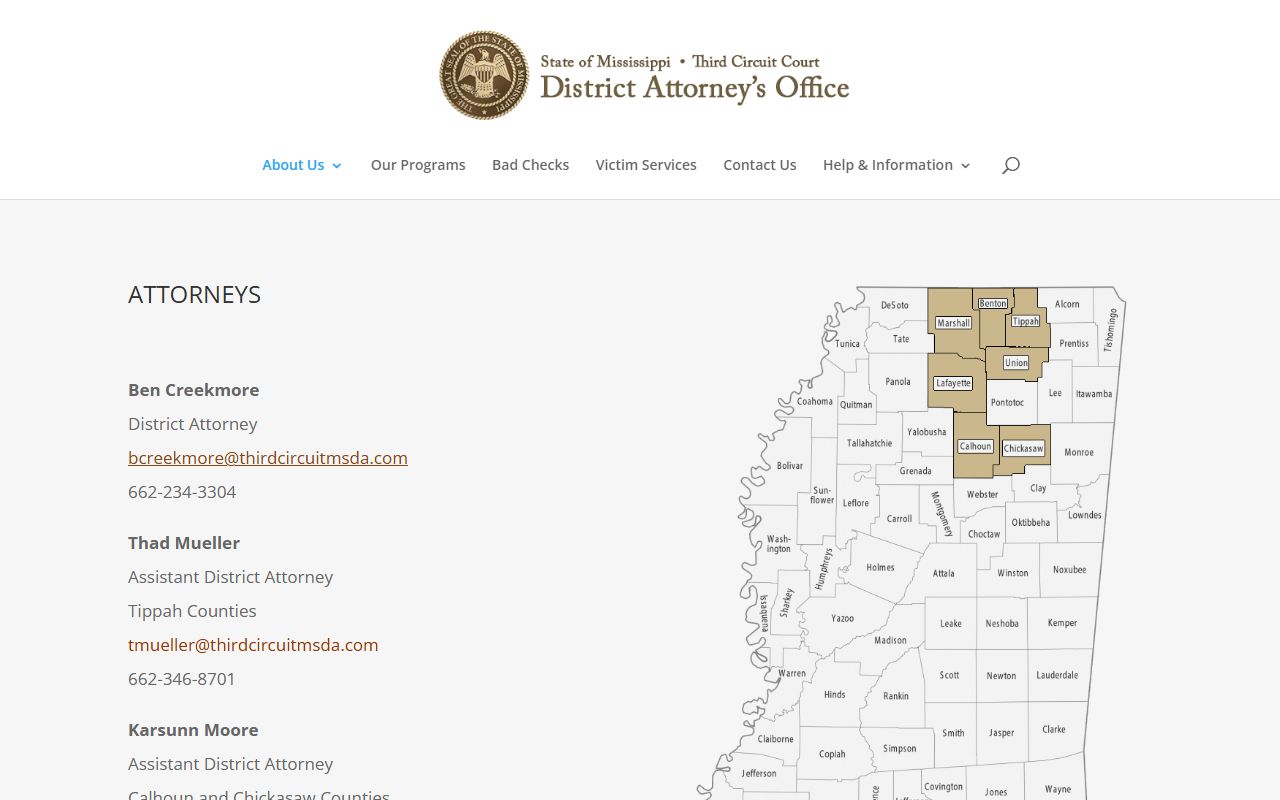
Knowing which assistant handles Union County matters helps a reader direct a question about a specific charge to the right person in the office.
Charges Compared With Convictions
A charge is an accusation. A conviction is a finding of guilt. The two are not the same, and a charge can be dropped, dismissed, or end in acquittal without ever becoming a conviction. A record that lists a charge but no conviction does not mean a person was found guilty. The disposition is the part that settles the question.
| Charge | Conviction | |
|---|---|---|
| Stage | Accusation at filing | Verdict or guilty plea |
| Burden of Proof | Probable cause | Beyond a reasonable doubt |
| Decided By | Prosecutor or grand jury | Judge or jury |
| Public Record | Yes | Yes |
Charge Codes and Severity Levels
Every charge is tied to a Mississippi statute, and the statute sets its level. A felony is the most serious class and is handled in Circuit Court. A misdemeanor is a lower-level offense, often handled in Justice Court or Municipal Court. One arrest can produce several separate charges at once, each with its own code and its own status. Reading the statute behind a charge shows exactly what is alleged, since the same plain word can cover offenses of very different weight.
Because the level decides which court hears the case, the charge code also predicts where the file will live. A felony bound over from a lower court moves up to Circuit Court for indictment. A misdemeanor usually stays in the court where it began. That is why a single name can appear in more than one court at the same time.
The severity of a charge also shapes what happens next, from the bond a judge may set to whether a grand jury is involved. A reduced charge can move a felony down to a misdemeanor, which changes the court, the possible penalty, and the long-term record. Reading both the original code and any amended code shows how the prosecutor and the court treated the case as it developed.
Sealed and Expunged Charge Records in Union County
Some charges are removed from public view. Sealing hides a record from ordinary searches. Expunction goes further and treats the matter as if it never happened in the public record. Mississippi allows qualifying expunctions under Miss. Code Section 99-19-71 for certain misdemeanors and a narrow set of felonies, after waiting periods and other conditions are met. Dropped and dismissed charges are often the strongest candidates for expunction.
| Sealed | Expunged | |
|---|---|---|
| Visibility | Hidden from public search | Treated as if it never existed |
| Law Enforcement | Limited access remains | Very limited access |
| Eligibility | By statute or court order | Miss. Code Section 99-19-71, with waiting periods and excluded felonies |
The petition is filed in the court that handled the charge, whether that was Justice Court, Municipal Court, or Circuit Court. If a Union County search still shows a charge that was expunged, the person should give the clerk a certified copy of the order so the public record can be corrected.
Statewide Tools Beyond Union County Charge Records
A one-county charge search does not capture everything. Mississippi offers a few official statewide tools that sit beside the local file. The Mississippi Department of Corrections lists people in state custody and on parole after sentencing. The state sex offender registry covers registered offenders by name or area. Federal charges are not in county records at all and run through their own system.
- MDOC inmate search - The Mississippi Department of Corrections lookup covers sentenced state inmates and parolees, not pretrial county custody.
- Sex offender registry - The Mississippi DPS registry lists registered offenders by name, area, or ZIP code.
- Federal charges - Cases from Union County in federal court are searched through PACER, which is separate from the county clerk.
None of these is an open, full criminal history of one person. For the official local record of a charge, the court file held by the clerk remains the source.
Background Check Considerations
Looking up one charge is not the same as a background check. A casual lookup answers a single question. A formal background check used for hiring, housing, or credit is governed by the federal Fair Credit Reporting Act and must come from a regulated agency. A name search on a public docket can also miss charges filed under a different spelling or in a different court.
Important: Union County Court Records is not an FCRA-regulated consumer reporting agency, and the information here may not be used to make credit, employment, tenant, or insurance decisions.
Restricted Union County Charge Records
Not every charge record is open to the public. Juvenile charges handled in Youth Court are confidential under Mississippi law and are not part of any open search. Sealed and expunged charges drop out of public view by law or court order. Charges in an active matter may be limited while the case is in progress, and documents can be restricted to the attorneys of record.
Ongoing investigations are another limit. A case can exist before any charge is filed, and the underlying investigative material is usually withheld until a charging decision is made. For any record that does not appear in a public search, the next step is a direct request to the court or agency that holds it, which can explain what may be released.
Personal identifiers add a further layer. Court privacy rules keep Social Security numbers, birth dates, the names of minor children, and home addresses out of public filings. When a charge record is viewable, those details may already be redacted in the public copy. A request that names the parties, the approximate date, and the court gives the office the best chance of locating the right file and releasing what the law allows.